
Reviewed by Dr. Bharath G, Surgical Oncologist, Precision Oncology Clinic, Bangalore
Cancer is a diagnosis that can bring fear, uncertainty and many questions. Unfortunately, along with genuine medical information, patients and families often encounter myths about cancer causes, cancer treatment, surgery, food and recovery.
Some of these misconceptions may appear harmless, but believing them can sometimes lead people to delay screening, diagnosis or appropriate treatment.
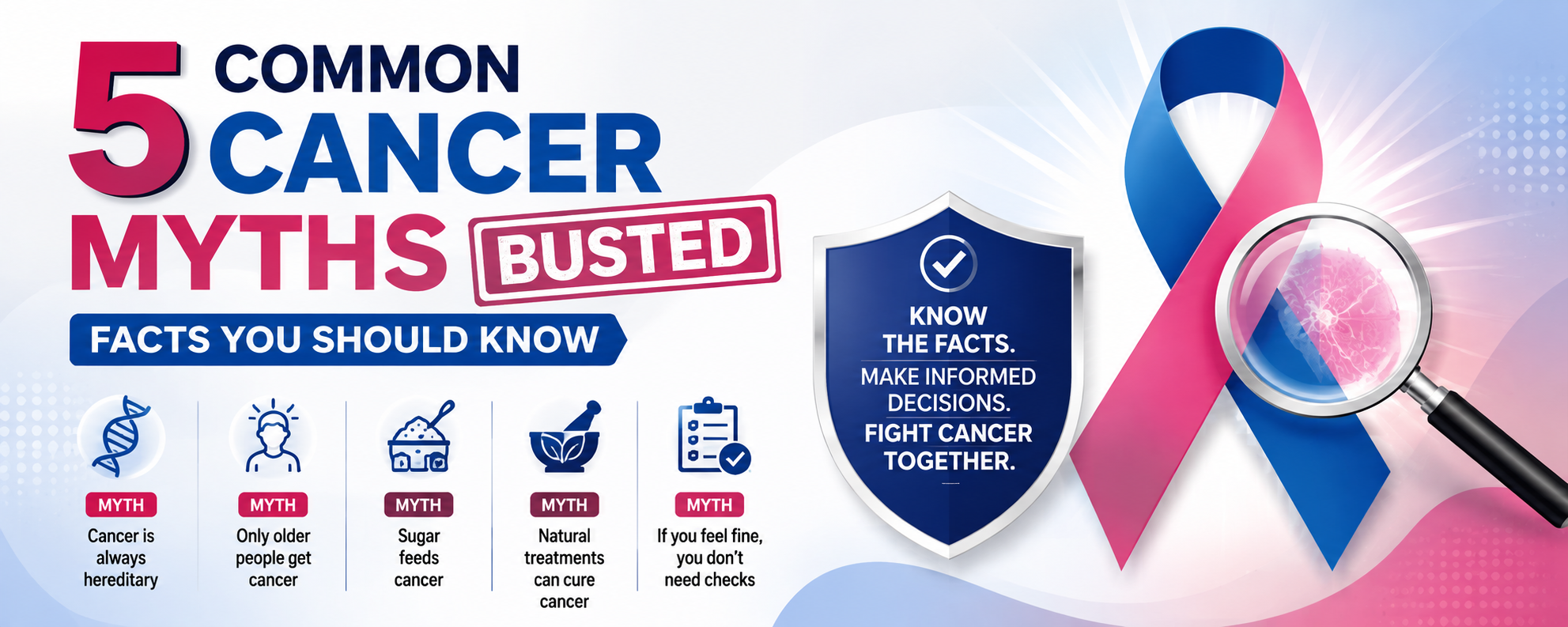
In this article, Dr. Bharath, Surgical Oncologist at Precision Oncology Clinic, Bangalore, explains five common cancer myths and the facts patients should know.
Myth 1: Cancer is always a death sentence
Fact: Many cancers can be treated successfully, particularly when detected early.
A cancer diagnosis does not automatically mean that treatment will be unsuccessful.
Cancer includes many different diseases, and the outlook depends on several factors, including:
- The type of cancer
- The stage at diagnosis
- Whether the cancer has spread
- The tumour’s biological characteristics
- The patient’s overall health
- How the cancer responds to treatment
Many cancers have significantly better outcomes when they are detected at an earlier stage and treated appropriately.
According to the World Health Organization, many cancers can be cured when detected early and treated effectively.
This is why cancer screening, recognising concerning symptoms and seeking medical evaluation promptly are important.
What patients should remember
A cancer diagnosis is not the end of the road. The next step is understanding the type and stage of cancer and discussing evidence-based treatment options with an appropriate cancer specialist.
Myth 2: Eating sugar makes cancer grow faster
Fact: Eating sugar does not mean that cancer will automatically grow or that stopping sugar will cure cancer.
This is one of the most commonly repeated cancer myths.
Cancer cells use glucose for energy, just as many normal cells do. However, this does not mean that eating sugar directly causes cancer to grow or that completely eliminating sugar will make an existing cancer disappear.
There is currently no evidence that simply stopping sugar consumption can shrink or cure cancer.
However, maintaining a balanced diet is still important during cancer prevention and treatment. Excessive consumption of high-calorie, sugary foods can contribute to weight gain, and excess body weight is associated with an increased risk of several cancers.
What patients should remember
Rather than eliminating individual foods based on internet claims, patients undergoing cancer treatment should discuss their nutritional needs with their doctor or a qualified oncology dietitian.
Myth 3: Cancer surgery or a biopsy causes cancer to spread
Fact: The risk of cancer spreading because of a properly performed biopsy or surgery is extremely low.
Many patients are understandably worried when their doctor recommends a biopsy.
A biopsy involves taking a sample of tissue so that it can be examined and accurately diagnosed. In many cancers, establishing the diagnosis is an essential step before deciding on treatment.
Similarly, surgery is an important treatment option for many solid tumours.
Modern cancer surgery follows established surgical principles and precautions designed to minimise the risk of tumour-cell spread.
The National Cancer Institute states that the chance of surgery causing cancer to spread to other parts of the body is extremely low when standard procedures are followed.
Why is surgery recommended?
Depending on the cancer type and stage, surgery may be used to:
- Remove a tumour completely
- Remove nearby lymph nodes when appropriate
- Reduce the size of a tumour
- Relieve symptoms caused by a tumour
- Help achieve local cancer control
- Form part of a larger treatment plan
Surgery may be combined with chemotherapy, radiation therapy, targeted therapy, immunotherapy or other treatments depending on the individual cancer.
What patients should remember
Do not avoid a recommended biopsy or cancer surgery because of fear that the procedure itself will spread cancer. Discuss the reason for the procedure, its benefits, risks and alternatives with your treating cancer team.
Myth 4: If nobody in my family has had cancer, I cannot get cancer
Fact: A family history can influence cancer risk, but people without a family history can also develop cancer.
Family history is one factor doctors consider when assessing cancer risk. Some cancers are associated with inherited genetic changes that can increase the likelihood of developing particular cancers.
However, most cancers are not simply inherited from a parent.
Cancer can develop because of genetic changes that occur during a person’s lifetime. Age, tobacco exposure, alcohol consumption, certain infections, excess body weight, environmental exposures and other factors can influence cancer risk.
Therefore, having no family history does not mean that a person has zero cancer risk.
When should family history be discussed with a doctor?
Speak with a doctor if you have:
- Several close relatives with cancer
- Cancer occurring at an unusually young age in the family
- Multiple relatives with the same or related cancers
- A family history of cancers associated with hereditary cancer syndromes
- More than one type of cancer occurring in the same relative
Depending on the situation, your doctor may recommend genetic counselling or testing.
What patients should remember
No family history does not equal no risk. Cancer prevention, appropriate screening and attention to persistent symptoms remain important.
Myth 5: Alternative or herbal treatments can cure cancer without medical treatment
Fact: There is no reliable evidence that herbal or alternative products can replace evidence-based cancer treatment.
Patients and families may hear claims about herbs, supplements, special diets, detox treatments or alternative therapies that supposedly cure cancer.
These claims should be approached with caution.
Some complementary approaches may help patients manage certain symptoms or improve wellbeing when used alongside appropriate medical care. However, they should not automatically be considered substitutes for proven cancer treatments.
Some supplements and herbal products can also interact with medicines or cancer treatments.
Why delaying treatment can be dangerous
Cancer treatment depends on the type and stage of cancer. Depending on the individual situation, treatment may include:
- Surgery
- Chemotherapy
- Radiation therapy
- Immunotherapy
- Targeted therapy
- Hormone therapy
- A combination of treatments
The right treatment plan is determined after evaluating the cancer and the individual patient.
What patients should remember
If you are considering an alternative or herbal treatment, tell your oncologist before taking it. Do not stop prescribed cancer treatment without discussing it with your treating team.
Why Cancer Facts Matter
Cancer misinformation can create unnecessary fear, encourage ineffective treatments or cause delays in diagnosis.
Reliable cancer information should come from qualified healthcare professionals and trusted medical organisations rather than social media posts or unverified online claims.
A cancer diagnosis should be approached systematically:
Diagnosis → Staging → Treatment Planning → Treatment → Follow-up
The treatment plan may involve one specialist or a multidisciplinary team depending on the type and stage of cancer.
When Should You Consult a Cancer Specialist?
You should seek medical evaluation if you have persistent or unexplained symptoms such as:
- An unexplained lump or swelling
- Unexplained weight loss
- Persistent difficulty swallowing
- Unusual bleeding
- A persistent change in bowel or bladder habits
- A persistent cough or voice change
- A sore that does not heal
- A new or changing mole or skin lesion
- Persistent unexplained pain
- Other symptoms that do not improve or are concerning to you
These symptoms do not necessarily mean cancer. Many can have non-cancerous causes. However, persistent or unexplained symptoms should be evaluated rather than ignored.
How a Surgical Oncologist Can Help
A surgical oncologist specialises in the surgical management of cancer.
Depending on the cancer type and stage, a surgical oncologist may be involved in:
- Evaluating whether surgery is appropriate
- Planning cancer surgery
- Removing primary tumours
- Evaluating or removing lymph nodes
- Performing complex cancer procedures
- Coordinating surgery with other cancer treatments
- Supporting patients through pre-operative and post-operative care
For many cancers, surgery is only one part of a broader treatment strategy. The treatment plan should be individualised according to the patient’s diagnosis and stage.
Cancer Treatment Requires an Individualised Approach
There is no single treatment that is suitable for every cancer patient.
Two people with the same broad cancer type may require different treatment approaches depending on tumour location, stage, pathology, molecular characteristics, overall health and other factors.
At Precision Oncology Clinic, cancer care involves understanding the individual diagnosis and discussing appropriate treatment options with the relevant oncology specialists.
If you or a family member has been diagnosed with cancer, getting the right information early can help you make informed decisions.
Frequently Asked Questions
1. Is cancer always fatal?
No. Cancer outcomes vary considerably depending on the cancer type, stage, biology and response to treatment. Many cancers can be successfully treated, particularly when detected early.
2. Does eating sugar cause cancer?
Sugar itself has not been shown to directly cause cancer or make an existing cancer automatically grow faster. However, excessive calorie intake can contribute to excess body weight, which is associated with increased risk of several cancers.
3. Can a biopsy spread cancer?
The chance of a properly performed biopsy causing cancer to spread is extremely low. Biopsies are often essential for establishing an accurate diagnosis and determining treatment.
4. Can cancer surgery spread cancer?
The risk of cancer spreading because of surgery is extremely low when appropriate surgical procedures are followed. Cancer surgery is an established treatment for many solid tumours.
5. Can herbal medicine cure cancer?
No herbal product has been proven to replace evidence-based cancer treatment. Some supplements can also interact with cancer medicines, so patients should discuss them with their treating doctor.
6. Can I get cancer if nobody in my family has had it?
Yes. While some cancers have hereditary components, many cancers develop because of genetic changes acquired during a person’s lifetime and other risk factors.
7. Does a positive attitude cure cancer?
Maintaining emotional and social support can help people cope with cancer, but there is no convincing evidence that a person’s attitude alone determines whether cancer develops or is cured.
Takeaway: Know the Facts, Not the Myths
Cancer information can be overwhelming, particularly immediately after diagnosis.
Instead of relying on social media claims or word-of-mouth advice, speak with a qualified cancer specialist and understand your diagnosis, stage and treatment options.
The right information can help patients make better-informed decisions about their cancer care.
Consult a Surgical Oncologist in Bangalore
If you or your family member has been diagnosed with cancer or has been advised to undergo cancer surgery, consult a qualified surgical oncologist to understand the available treatment options.
Dr. Bharath
Surgical Oncologist | Precision Oncology Clinic, Bangalore
📞 Book a Consultation: +91 95915 35454
Medical Disclaimer
This article is intended for general educational and awareness purposes only. It does not replace consultation, diagnosis or treatment from a qualified medical professional. Cancer treatment depends on the individual’s cancer type, stage, pathology, overall health and other clinical factors. Patients should consult their treating doctor before making decisions about diagnosis or treatment.

