

Medically reviewed by Dr. Vivek Belathur, Medical Oncologist, Precision Oncology Clinic, Bangalore
Breast cancer is one of the most common cancers affecting women worldwide. Knowing the possible signs and symptoms can help women recognise changes in their breasts and seek medical advice without unnecessary delay.
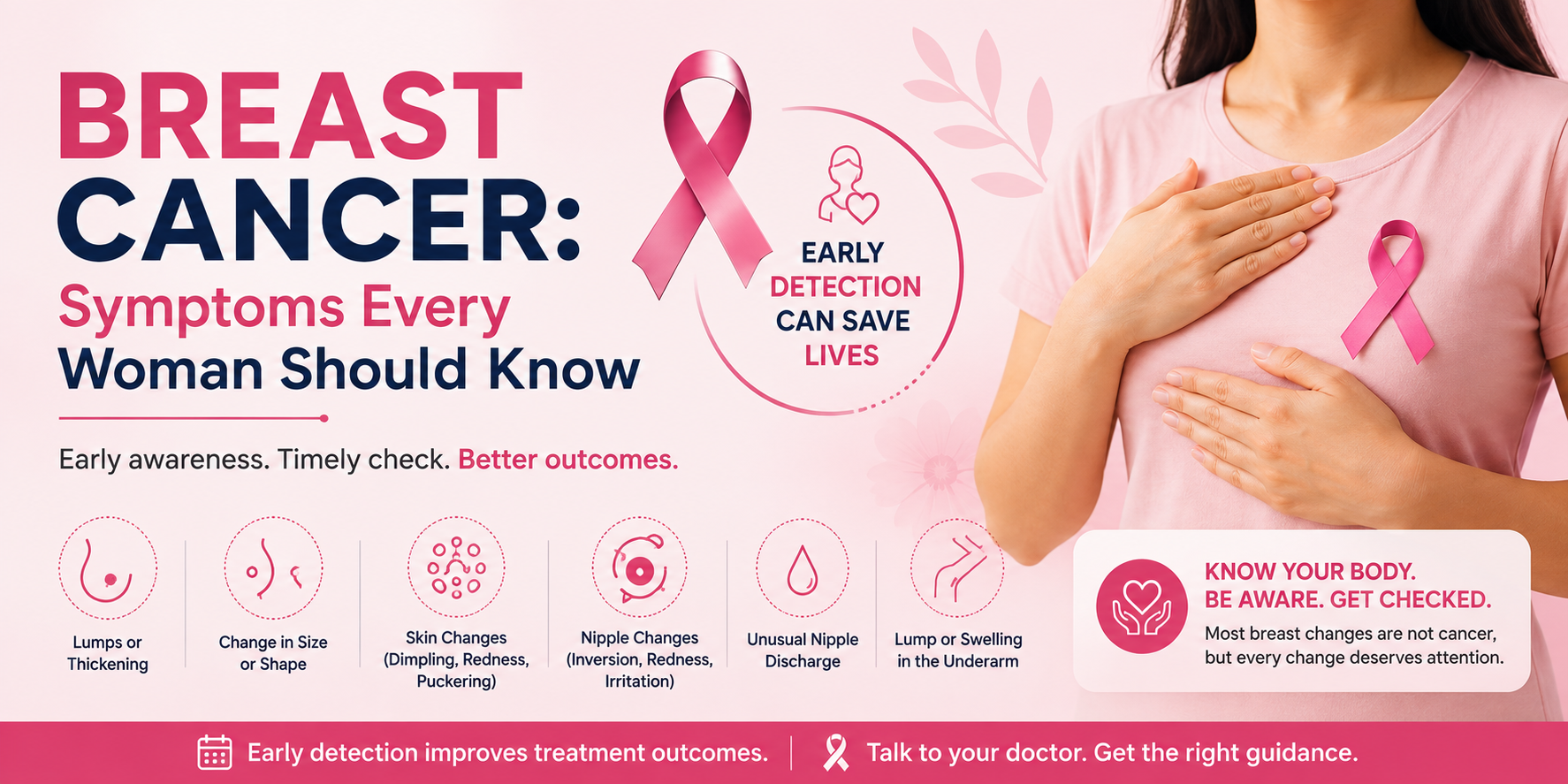
A breast lump is one of the most recognised warning signs, but breast cancer does not always present as a lump. Changes in breast size or shape, skin changes, nipple changes or unusual nipple discharge may also need evaluation.
Importantly, most breast changes are not caused by cancer. However, any new, unusual or persistent change should be assessed by a qualified healthcare professional.
What Is Breast Cancer?
Breast cancer develops when abnormal cells in the breast grow uncontrollably and form a tumour. Breast cancer can begin in different parts of the breast, including the milk ducts and milk-producing lobules.
It can affect one or both breasts and, depending on its type and stage, can spread to nearby lymph nodes or other parts of the body.
The good news is that early diagnosis and timely treatment can improve outcomes. This makes awareness of breast cancer symptoms particularly important.
7 Breast Cancer Symptoms Every Woman Should Know
1. A New Lump or Thickening in the Breast
A new lump in the breast is one of the most common signs that should be checked.
A lump may:
- Feel firm or hard
- Feel different from the surrounding breast tissue
- Occur within the breast
- Develop near the breast or under the arm
- Be painless
Breast cancer lumps are often painless, which means you should not wait for a lump to become painful before seeking medical advice.
At the same time, most breast lumps are not cancerous. Cysts, fibroadenomas and other benign conditions can also cause breast lumps.
Any new or unusual lump should therefore be evaluated rather than self-diagnosed.
2. A Change in the Size or Shape of the Breast
A noticeable change in one breast compared with the other may require evaluation.
Look for:
- A newly developed difference in breast size
- A change in breast shape
- New asymmetry
- Swelling in part or all of the breast
- A breast appearing different from its usual appearance
Some degree of natural breast asymmetry is common. The concern is a new or noticeable change from your normal appearance.
3. Changes in the Skin of the Breast
Breast cancer can sometimes cause visible changes to the skin.
Possible changes include:
- Dimpling
- Puckering
- Redness
- Darkening
- Swelling
- Thickening
- A change in skin texture
- A rash or scaly skin
- Skin that appears different from the surrounding breast
One commonly discussed appearance is skin that looks dimpled or uneven.
Persistent skin changes should not be ignored, particularly when they are new or occur together with another breast change.
4. Changes in the Nipple
Changes involving the nipple can sometimes be a warning sign.
These may include:
- A nipple becoming newly inverted
- A change in the direction of the nipple
- Flattening of the nipple
- Changes in the appearance of the nipple
- Persistent irritation or skin changes around the nipple
A nipple that has always been slightly inverted is different from a new change in nipple position or appearance.
If you notice a new nipple change, consult your doctor for assessment.
5. Unusual Nipple Discharge
Nipple discharge that is not breast milk can have several causes.
However, spontaneous or bloody nipple discharge should be medically evaluated.
Other factors, including medications, hormonal changes and benign breast conditions, can also cause nipple discharge.
Rather than assuming the cause, it is better to have unusual or persistent discharge assessed by a doctor.
6. A Lump or Swelling Under the Arm
Breast cancer can sometimes involve lymph nodes under the arm.
A new lump or swelling in the armpit may therefore need medical assessment, especially if it occurs along with a breast lump or other breast changes.
However, swollen lymph nodes can also occur because of infections and other non-cancerous conditions.
A doctor can determine whether further investigation is necessary.
7. Persistent Changes or Symptoms That Are Not Normal for You
Not every breast cancer presents in exactly the same way.
Some women may notice a combination of symptoms, while others may have very few noticeable changes.
This is why it is important to know what is normal for your breasts and to seek medical advice when something changes and does not settle.
Breast cancer can also occur without obvious symptoms, which is one reason screening and appropriate medical evaluation are important.
Does Breast Cancer Always Cause a Lump?
No.
A lump is an important warning sign, but breast cancer can also present with changes in:
- Breast size or shape
- Skin appearance
- Nipple appearance
- Nipple discharge
- Breast swelling
- The area under the arm
Early breast cancer may have no symptoms at all, which is why appropriate screening is important for women who are eligible under applicable screening recommendations.
Is Breast Pain a Sign of Breast Cancer?
Breast pain alone is not usually the typical presentation of breast cancer.
Breast pain can occur because of hormonal changes, menstrual cycles, cysts, medications and several other non-cancerous conditions.
However, persistent or unexplained breast pain should still be discussed with a healthcare professional, particularly if it occurs alongside another breast change.
What Should You Do If You Notice a Breast Change?
If you notice a new breast lump, nipple change, skin change, unusual discharge or another persistent change, do not panic.
Instead:
1. Make a note of the change
Pay attention to when you first noticed it and whether it is changing.
2. Arrange a medical evaluation
A doctor can perform a clinical breast examination and determine whether further investigation is required.
3. Follow the recommended tests
Depending on your age, symptoms and clinical findings, your doctor may recommend imaging such as mammography or ultrasound and, when necessary, tissue sampling.
4. Do not self-diagnose
A breast change does not automatically mean cancer. Many breast conditions are benign.
The purpose of medical evaluation is to determine the actual cause.
How Is Breast Cancer Diagnosed?
If a breast change is concerning, your doctor may begin with your medical and family history and a clinical breast examination.
Depending on the findings, diagnostic tests may include:
- Mammography
- Breast ultrasound
- Breast MRI in selected situations
- Biopsy
- Laboratory or pathology testing
A biopsy may be recommended when tissue needs to be examined to establish a definitive diagnosis.
The diagnostic approach depends on the individual patient’s symptoms and clinical findings.
Who Is at Risk of Breast Cancer?
Breast cancer can occur even when a woman has no known family history or obvious risk factor.
Factors associated with increased breast cancer risk include:
- Increasing age
- Family history of breast cancer
- Certain inherited genetic mutations
- Previous radiation exposure
- Obesity, particularly after menopause
- Alcohol consumption
- Certain reproductive and hormonal factors
- Some forms of hormone therapy
Importantly, having no family history does not mean that a woman cannot develop breast cancer. WHO reports that approximately 80% of breast cancers occur in women without specific risk factors other than sex and age.
Can Breast Cancer Be Detected Early?
Yes.
Early detection involves recognising concerning symptoms promptly and, where appropriate, participating in breast cancer screening programmes.
Screening recommendations can vary depending on age, risk factors, country and individual circumstances.
Mammography can help detect breast cancer before symptoms become apparent in some women.
Women with a strong family history or known hereditary risk may require a different surveillance strategy. Discuss your individual risk with your doctor.
Why Early Diagnosis Matters
When breast cancer is identified at an earlier stage, treatment can often be more effective and may offer better outcomes.
Treatment depends on factors such as:
- Type of breast cancer
- Stage
- Tumour characteristics
- Hormone receptor status
- HER2 status
- Overall health
- Whether lymph nodes or other organs are involved
Treatment may involve one or a combination of:
- Surgery
- Radiation therapy
- Chemotherapy
- Hormone therapy
- Targeted therapy
- Immunotherapy in selected cases
Breast cancer treatment is therefore not a one-size-fits-all approach.
When Should You See a Breast Cancer Specialist?
Consider consulting a doctor if you notice:
- A new breast lump
- A new lump under the arm
- Persistent breast thickening
- A new change in breast size or shape
- Skin dimpling or puckering
- Persistent redness or skin changes
- New nipple inversion
- Unusual nipple discharge, particularly bloody discharge
- Persistent or unexplained breast changes
Remember: a breast symptom does not automatically mean cancer.
But checking a new or unusual change is better than ignoring it.
Dr. Vivek Belathur – Medical Oncologist
Dr. Vivek Belathur is a Medical Oncologist at Precision Oncology Clinic, Bangalore.
A medical oncologist plays an important role in the diagnosis and treatment planning of cancer and may coordinate systemic treatments such as chemotherapy, targeted therapy, hormone therapy and immunotherapy depending on the patient’s diagnosis.
For breast cancer, treatment planning often involves a multidisciplinary team that may include medical oncology, surgical oncology, radiation oncology, radiology and pathology specialists.
The treatment plan is developed according to the individual’s cancer type, stage and tumour characteristics.
Breast Cancer: The Most Important Message
Knowing the signs of breast cancer does not mean living in fear.
It means being aware of your body and understanding when a change deserves medical attention.
A new breast lump, nipple change, unusual discharge, skin change or persistent breast abnormality should not be ignored.
Most breast changes are not cancer, but timely medical evaluation can help identify the cause and, when cancer is present, support earlier diagnosis and treatment.
Frequently Asked Questions About Breast Cancer Symptoms
1. What is the most common symptom of breast cancer?
A new lump or thickening in the breast is one of the most common symptoms. However, breast cancer can also cause skin, nipple, breast-shape or discharge changes.
2. Can breast cancer occur without a lump?
Yes. Breast cancer may cause changes such as skin dimpling, swelling, nipple changes or unusual discharge. Early breast cancer may also have no noticeable symptoms.
3. Is a painless breast lump a sign of cancer?
A painless breast lump can be a sign of breast cancer, but many benign breast conditions also cause painless lumps. Any new or unusual lump should be evaluated by a doctor.
4. Is breast pain a symptom of breast cancer?
Breast cancer does not usually cause pain. Breast pain has many other possible causes, but persistent or unexplained pain should be discussed with a healthcare professional.
5. Is nipple discharge always a sign of breast cancer?
No. Nipple discharge can have several non-cancerous causes. However, spontaneous or bloody discharge should be medically evaluated.
6. Can breast cancer happen without a family history?
Yes. Many women diagnosed with breast cancer do not have a known family history of the disease.
7. Can young women get breast cancer?
Yes. Breast cancer can occur in younger women, although risk generally increases with age. Women should discuss unusual breast changes with a doctor regardless of age.
8. What should I do if I find a breast lump?
Do not panic or try to diagnose it yourself. Arrange an appointment with a qualified healthcare professional for clinical evaluation and follow any recommended imaging or diagnostic tests.
Book a Consultation at Precision Oncology Clinic
If you have noticed a new breast lump or another unusual breast change, timely medical evaluation can help determine the cause and guide the next steps.
Dr. Vivek Belathur
Medical Oncologist
Precision Oncology Clinic, Bangalore
Book an Appointment: +91 95915 35454
Medical Disclaimer
This article is intended for general health education and awareness. It does not replace a medical consultation, diagnosis or personalised treatment plan. Breast changes can have many causes, and only a qualified healthcare professional can determine the appropriate evaluation and treatment for an individual patient.

