

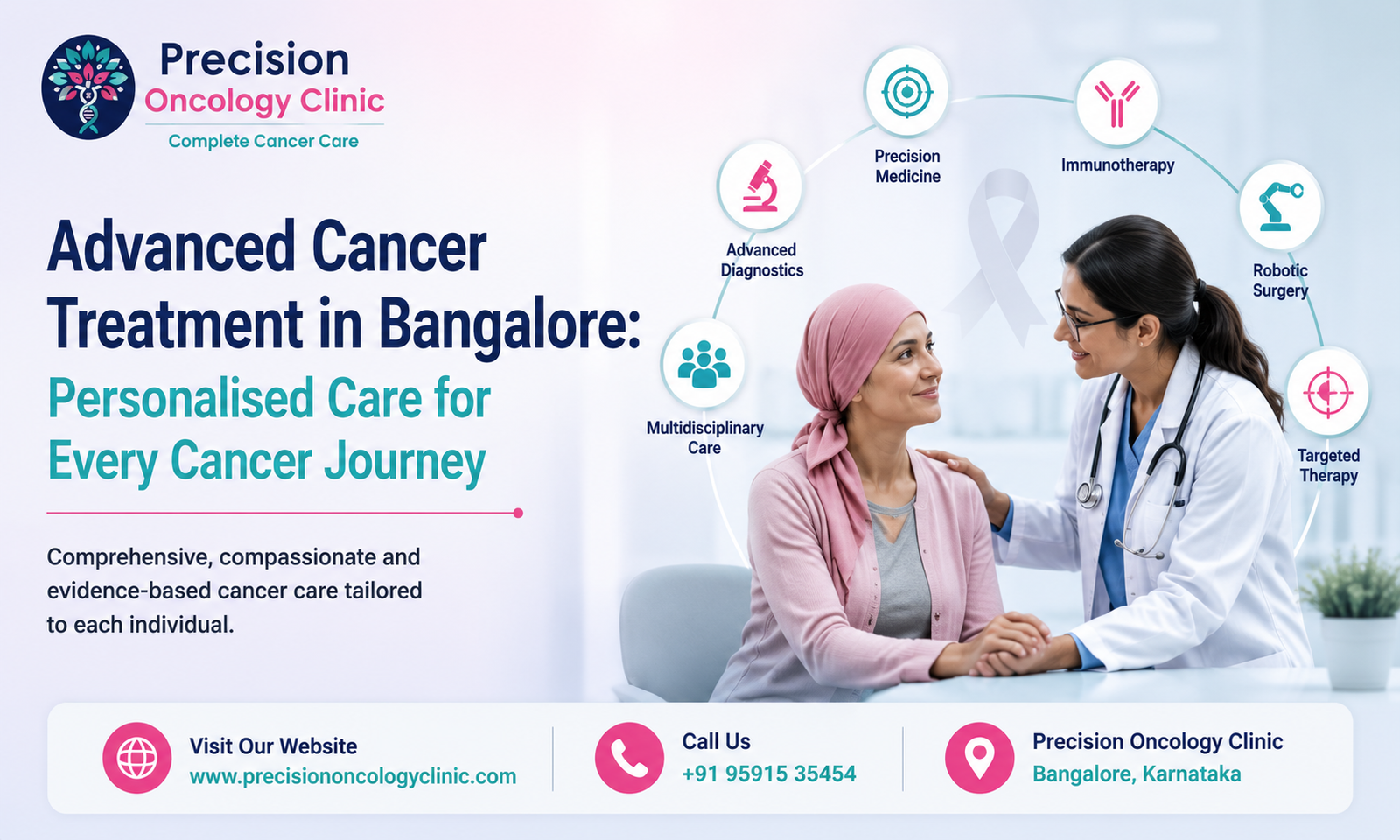
Cancer treatment has evolved significantly over the years. Today, cancer care is no longer limited to surgery, chemotherapy, or radiation alone. Advances in diagnostics, molecular testing, targeted therapies, immunotherapy, minimally invasive surgery, and precision medicine are helping oncologists develop increasingly personalised treatment strategies.
For patients and families looking for advanced cancer treatment in Bangalore, choosing the right oncology team is an important part of the treatment journey.
At Precision Oncology Clinic, Bangalore, the focus is on comprehensive and personalised cancer care. Treatment decisions are based on factors such as the type of cancer, stage of disease, pathology, molecular characteristics, overall health, and individual needs of each patient.
What Is Advanced Cancer Treatment?
Advanced cancer treatment refers to modern, evidence-based approaches used to diagnose, treat, and manage different types and stages of cancer.
Rather than following the same treatment approach for every patient, modern oncology aims to answer important questions:
- What type and subtype of cancer does the patient have?
- Has the cancer remained localised or spread to other parts of the body?
- Are there specific biomarkers or genetic alterations that could influence treatment?
- Is surgery appropriate?
- Would chemotherapy or radiation therapy provide benefit?
- Could targeted therapy or immunotherapy be considered?
- Would a combination of treatments provide a better clinical approach?
Answering these questions helps oncologists develop a more individualised cancer treatment plan.
Personalised Cancer Care at Precision Oncology Clinic
Every cancer diagnosis is different.
Even two people diagnosed with the same type of cancer may have differences in tumour biology, stage, molecular characteristics, age, overall health, and response to treatment.
At Precision Oncology Clinic in Bangalore, cancer care follows a personalised approach in which specialists evaluate the individual clinical characteristics of each patient before recommending treatment.
Depending on the diagnosis, a personalised treatment plan may involve one or a combination of:
- Surgical oncology
- Chemotherapy
- Radiation therapy
- Targeted therapy
- Immunotherapy
- Hormone therapy
- Precision medicine
- Supportive and palliative care
The objective is to identify an appropriate evidence-based treatment strategy while considering both disease control and the patient’s overall wellbeing.
Advanced Cancer Treatment Options
1. Surgical Oncology
Surgery remains an important treatment option for many solid tumours, particularly when cancer is localised and can be safely removed.
Modern surgical oncology focuses not only on removing cancer but also, where clinically appropriate, on preserving healthy tissue, organ function, and quality of life.
Depending on the cancer and individual circumstances, surgical approaches may include conventional open surgery or minimally invasive techniques.
Surgery may be used independently or combined with chemotherapy, radiation therapy, targeted therapy, or other treatments.
2. Chemotherapy
Chemotherapy uses anti-cancer medicines to destroy cancer cells or prevent them from growing and dividing.
Depending on the diagnosis, chemotherapy may be given:
Before surgery – Neoadjuvant chemotherapy
This may help shrink a tumour before surgical removal.
After surgery – Adjuvant chemotherapy
This may help reduce the risk of cancer returning by treating microscopic cancer cells that may remain.
As a primary or systemic treatment
Chemotherapy may also be used to treat cancers that cannot be treated with surgery alone or that have spread to other areas of the body.
Treatment selection, dosage, and duration depend on the type and stage of cancer and the patient’s overall health.
3. Radiation Therapy
Radiation therapy uses high-energy radiation to damage and destroy cancer cells.
It may be recommended:
- Before surgery to reduce tumour size
- After surgery to treat remaining cancer cells
- Along with chemotherapy
- As the primary treatment for selected cancers
- To relieve symptoms caused by advanced cancer
Modern radiation oncology aims to deliver treatment accurately to the tumour while limiting unnecessary radiation exposure to surrounding healthy tissues.
4. Targeted Therapy
One of the major developments in modern oncology is the ability to identify specific molecular characteristics that contribute to cancer growth.
Targeted therapy uses medicines designed to interfere with particular proteins, pathways, or molecular alterations involved in tumour development.
However, targeted therapy is not appropriate for every cancer or every patient.
Biomarker testing or molecular profiling may sometimes be recommended to determine whether a tumour has an actionable target for which an approved treatment is available.
5. Immunotherapy
The immune system normally identifies and eliminates abnormal cells. However, some cancer cells develop mechanisms that help them avoid immune detection.
Cancer immunotherapy is designed to help the immune system recognise or attack cancer more effectively.
Immunotherapy has become an important treatment option for selected patients with certain cancers.
Whether a patient may benefit depends on several factors, including:
- Cancer type
- Stage
- Previous treatments
- Biomarker results
- Overall medical condition
An oncologist must carefully evaluate these factors before recommending immunotherapy.
6. Precision Oncology and Molecular Testing
Precision oncology represents an increasingly important approach to cancer treatment.
Traditionally, cancers have largely been classified according to the organ where they originate—for example, breast cancer, lung cancer, or colorectal cancer.
Today, oncologists may also examine the molecular characteristics of the tumour.
Depending on the cancer type and clinical situation, molecular or biomarker testing may help identify genetic alterations or biological markers that could influence treatment decisions.
This information may help determine whether certain targeted therapies or immunotherapies could be appropriate.
Precision oncology does not mean that every patient requires genetic testing or targeted treatment. Testing and treatment decisions should always be based on clinical evidence and specialist evaluation.
Multidisciplinary Cancer Care: Why It Matters
Cancer treatment often requires expertise from several medical specialties.
A multidisciplinary approach may involve:
- Medical oncologists
- Surgical oncologists
- Radiation oncologists
- Radiologists
- Pathologists
- Molecular diagnostic specialists
- Nutrition specialists
- Pain and palliative care specialists
- Other supportive care professionals
Collaboration between specialists can help ensure that different treatment options are considered before developing an individual treatment plan.
At Precision Oncology Clinic, the emphasis is on coordinated cancer care tailored to the patient’s diagnosis and treatment needs.
Cancers That May Require Specialised Oncology Care
Advanced and personalised oncology approaches may be used across many cancer types, including:
Breast Cancer
Treatment may involve surgery, radiation therapy, chemotherapy, hormone therapy, targeted therapy, or immunotherapy depending on the cancer subtype and stage.
Lung Cancer
Molecular and biomarker testing can be particularly important for selected lung cancers because certain genetic alterations may influence targeted treatment options.
Colorectal Cancer
Treatment may include surgery, chemotherapy, targeted therapy, immunotherapy, or combinations of these approaches depending on tumour location, stage, and molecular characteristics.
Head and Neck Cancer
Management may require coordinated treatment involving surgery, radiation therapy, systemic therapy, and rehabilitation.
Ovarian and Gynaecological Cancers
Treatment strategies may include surgery, chemotherapy, targeted treatment, and other systemic therapies based on the specific diagnosis.
Prostate and Urological Cancers
Treatment may involve surgery, radiation therapy, hormone therapy, systemic treatment, or active surveillance depending on the cancer and its risk profile.
Gastrointestinal Cancers
Cancers affecting the stomach, pancreas, liver, oesophagus, and gastrointestinal tract often require multidisciplinary evaluation and carefully coordinated treatment.
Blood Cancers
Leukaemia, lymphoma, and multiple myeloma require specialised evaluation and systemic treatment strategies that differ significantly from those used for solid tumours.
Importance of Early Cancer Detection
Advanced treatments are transforming cancer care, but early detection remains one of the most important factors influencing treatment options and outcomes for many cancers.
Cancer detected at an earlier stage may offer:
- More treatment options
- Greater possibility of curative treatment for certain cancers
- Potentially less extensive treatment
- Better long-term outcomes in many situations
Cancer screening recommendations vary according to age, sex, individual risk factors, and family history.
People should discuss appropriate screening with their healthcare provider, particularly if they have a strong family history of cancer or other recognised risk factors.
When Should You Consult a Cancer Specialist?
Not every unusual symptom means cancer. However, persistent or unexplained changes should be medically

