

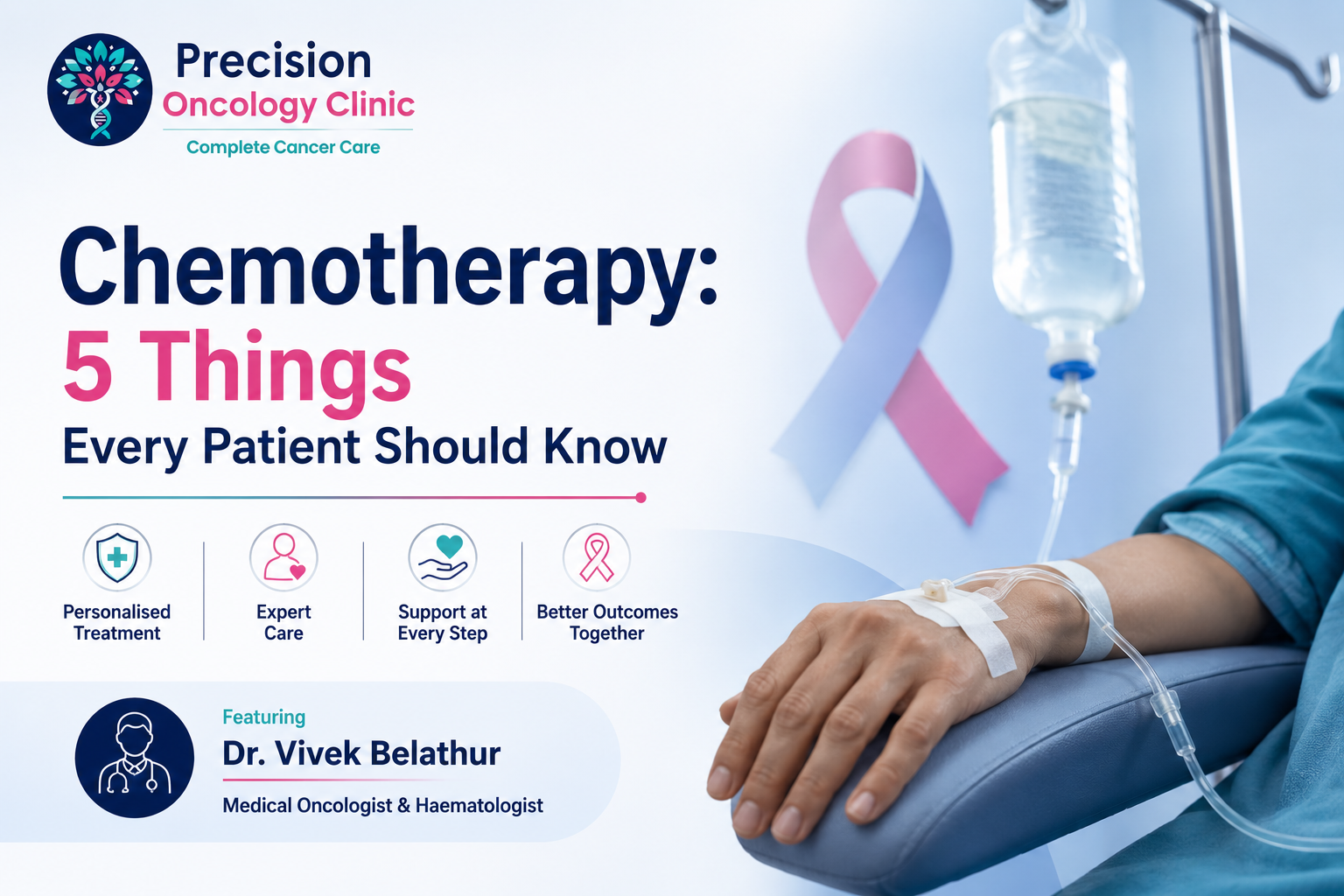
Hearing the word chemotherapy can bring many questions: Will I lose my hair? Will I feel sick throughout treatment? Can I continue working? How long will chemotherapy last?
Understanding what chemotherapy is, why it is recommended and what to expect can help patients and families feel better prepared for the treatment journey.
Featuring insights around modern cancer care with Dr. Vivek Belathur, Medical Oncologist and Haematologist at Precision Oncology Clinic, Bangalore, here are five important things every patient should know before starting chemotherapy.
1. Chemotherapy Is Not the Same for Every Patient
One of the most important things to understand is that chemotherapy is not a single treatment.
There are many different chemotherapy medicines and combinations. The treatment recommended for one patient may be completely different from that prescribed for another—even when both have cancer.
An oncologist develops a treatment plan based on factors such as:
- Type and subtype of cancer
- Stage of cancer
- Tumour characteristics
- Patient’s age and overall health
- Previous cancer treatments
- Treatment goals
- Other medical conditions
- How the cancer responds to treatment
Chemotherapy may also be combined with surgery, radiation therapy, targeted therapy, immunotherapy or hormone therapy depending on the individual diagnosis.
Why is chemotherapy given?
Chemotherapy can have different purposes.
Neoadjuvant chemotherapy may be given before surgery to shrink a tumour and make subsequent treatment more effective or feasible.
Adjuvant chemotherapy may be recommended after surgery to destroy microscopic cancer cells that may remain and reduce the risk of recurrence in selected cancers.
For some cancers, chemotherapy is the primary treatment.
In advanced or metastatic cancer, chemotherapy may be used to control cancer growth, relieve symptoms and, in appropriate situations, help patients live longer.
Your oncologist should explain why chemotherapy is being recommended and what the treatment is intended to achieve before therapy begins.
2. Not Everyone Experiences the Same Side Effects
Many patients are understandably concerned about chemotherapy side effects.
Chemotherapy works by targeting rapidly dividing cells. Because some healthy cells also divide rapidly, they can sometimes be affected during treatment.
Depending on the medicines used, possible side effects can include:
- Fatigue
- Nausea or vomiting
- Hair loss or thinning
- Changes in appetite
- Mouth sores
- Diarrhoea or constipation
- Changes in taste
- Reduced blood cell counts
- Increased susceptibility to infection
- Numbness or tingling in the hands and feet with certain medicines
However, not every chemotherapy drug causes every side effect, and the severity varies considerably between patients.
For example, not all chemotherapy treatments cause complete hair loss.
Modern supportive medicines can also help prevent or manage several treatment-related side effects, particularly nausea and vomiting.
Patients should tell their oncology team about symptoms rather than trying to tolerate them silently. Early management can often make treatment more comfortable and help prevent complications.
3. Chemotherapy Is Usually Given in Cycles
Chemotherapy is commonly delivered according to a planned schedule known as a treatment cycle.
A cycle usually includes a treatment period followed by a recovery period.
This allows healthy cells and the body time to recover before the next treatment.
Depending on the cancer and chemotherapy regimen, treatment may be administered:
- Weekly
- Every two weeks
- Every three weeks
- According to another specialised schedule
Some chemotherapy medicines are given intravenously through a vein, while others may be taken orally as tablets or capsules.
The total duration of treatment varies widely.
Before starting chemotherapy, patients should understand:
- How the medicine will be administered
- How often treatment is required
- Approximately how long each session may take
- How many cycles are initially planned
- What tests are required between cycles
Blood tests are commonly performed during chemotherapy to monitor blood cell counts and organ function and to ensure that treatment can be given safely.
4. Your Daily Routine May Change – But Life Does Not Always Have to Stop
A common question patients ask is:
“Can I continue working and doing normal activities during chemotherapy?”
The answer depends on the individual.
Some people are able to continue many of their regular activities during treatment, while others need additional rest or adjustments to their schedule.
Energy levels may vary throughout each chemotherapy cycle. Some patients notice predictable days when fatigue or other side effects are stronger.
Listening to your body is important.
During chemotherapy, patients should generally focus on:
Nutrition
Try to maintain adequate nutrition and hydration. Appetite and taste may change during treatment, so smaller and more frequent meals may sometimes be easier.
If eating becomes difficult or significant weight loss occurs, discuss this with your oncology team.
Physical Activity
When medically appropriate, gentle physical activity such as walking may help maintain strength and wellbeing.
The appropriate activity level depends on your health and treatment, so discuss exercise with your doctor.
Infection Prevention
Some chemotherapy treatments temporarily reduce white blood cells, increasing infection risk.
Good hand hygiene and avoiding unnecessary exposure to people with contagious illnesses may be particularly important during periods of reduced immunity.
Emotional Wellbeing
Cancer treatment affects more than physical health.
Fear, uncertainty, stress and changes in routine are understandable during treatment. Support from family, friends, counsellors and the healthcare team can be valuable.
Cancer care should support the whole patient, not only treat the tumour.
5. Know When to Contact Your Oncology Team
One of the most important parts of chemotherapy education is knowing which symptoms require medical attention.
Contact your oncology team promptly if you develop concerning symptoms during chemotherapy.
These may include:
- Fever or signs of infection
- Severe or persistent vomiting
- Inability to drink enough fluids
- Severe diarrhoea
- Unusual bleeding or bruising
- Shortness of breath
- Chest pain
- Severe weakness or dizziness
- Confusion
- A significant allergic reaction
- Any sudden or rapidly worsening symptom
Your treating team should provide specific instructions about what temperature constitutes a fever and whom to contact outside normal clinic hours, as recommendations can vary according to treatment.
Never wait until your next scheduled appointment if you develop a symptom your oncology team has advised requires urgent attention.
Does Chemotherapy Always Cause Hair Loss?
No.
This is one of the most common misconceptions about chemotherapy.
Whether hair loss occurs depends primarily on the chemotherapy medicines and doses being used.
Some treatments cause significant hair loss, others cause thinning, and some have little effect on hair.
When chemotherapy-related hair loss occurs, it is usually temporary, although the pattern and timing of regrowth can vary.
Ask your oncologist about the likelihood of hair loss with your specific treatment before chemotherapy begins.
How Do Doctors Know Whether Chemotherapy Is Working?
The oncology team monitors treatment response in different ways depending on the cancer.
Assessment may involve:
- Physical examinations
- Blood tests
- Tumour markers when clinically relevant
- CT, MRI, PET or other imaging
- Evaluation of symptoms
- Other cancer-specific investigations
Treatment may sometimes be modified depending on how the cancer responds and how well the patient tolerates therapy.
Regular follow-up with your oncologist is therefore an essential part of chemotherapy treatment.
Is Chemotherapy the Only Treatment for Cancer?
No.
Modern cancer care includes several treatment approaches.
Depending on the cancer, patients may receive:
- Surgery
- Chemotherapy
- Radiation therapy
- Immunotherapy
- Targeted therapy
- Hormone therapy
- Precision oncology approaches
- Supportive and palliative care
Some patients need only one type of treatment, while others benefit from a combination.
Advances in molecular diagnostics and precision oncology also allow doctors to evaluate certain cancers for biomarkers or molecular alterations that may help guide treatment decisions.
The appropriate approach should always be determined after an individual oncology assessment.
Meet Dr. Vivek Belathur – Medical Oncologist and Haematologist in Bangalore
Dr. Vivek Belathur is a Medical Oncologist and Haematologist associated with Precision Oncology Clinic, Bangalore.
Medical oncologists play a central role in evaluating and managing systemic cancer treatments, which may include chemotherapy, immunotherapy, targeted therapy and other medicines depending on the diagnosis.
For patients beginning chemotherapy, understanding the treatment plan is important.
Questions you may want to ask your oncologist include:
- Why is chemotherapy recommended for my cancer?
- What is the goal of my treatment?
- Which medicines will I receive?
- How many cycles might I need?
- What side effects should I expect?
- Which symptoms require urgent medical attention?
- How will we know whether treatment is working?
- Are there alternative or additional treatment options?
Patients should feel comfortable asking questions and understanding their treatment before making healthcare decisions.
Personalised Cancer Care at Precision Oncology Clinic, Bangalore
Cancer treatment is increasingly personalised.
At Precision Oncology Clinic, the focus is on comprehensive, evidence-based cancer care based on each patient’s diagnosis and individual clinical needs.
Depending on the cancer, multidisciplinary care may involve medical oncologists, surgical oncologists, radiation oncologists and other specialists working together to determine an appropriate treatment strategy.
Cancer care may include:
- Chemotherapy
- Surgical oncology
- Radiation oncology
- Targeted therapy
- Immunotherapy
- Precision oncology
- Second-opinion consultations
- Supportive cancer care
The goal is to help patients understand their diagnosis, available treatment options and the next steps in their cancer journey.
Frequently Asked Questions About Chemotherapy
Is chemotherapy painful?
The chemotherapy medicine itself is generally not painful when administered correctly, although inserting an intravenous cannula may cause brief discomfort. Some treatments can cause side effects during or after administration. Tell your treatment team immediately if you experience pain, burning or swelling around an IV site.
How long does a chemotherapy session take?
It varies considerably. Some treatments take a relatively short time, while others require several hours or longer. The duration depends on the medicines and treatment protocol.
Can I eat before chemotherapy?
Many patients can eat before chemotherapy, and a light meal may sometimes be preferable. However, instructions vary depending on the treatment, so follow the advice provided by your oncology team.
Can chemotherapy cure cancer?
Chemotherapy can be curative in certain cancers and clinical situations. In others, it may reduce recurrence risk, shrink tumours, control disease or relieve symptoms. The treatment goal depends on the specific diagnosis and stage.
Can chemotherapy be combined with immunotherapy or targeted therapy?
Yes, for selected cancers and patients. Treatment combinations depend on cancer type, stage, biomarkers and other clinical factors.
Preparing for Chemotherapy? Speak With a Cancer Specialist
Starting chemotherapy can feel overwhelming, but understanding your treatment can help you prepare for the journey ahead.
If you or a loved one has been diagnosed with cancer or would like a second opinion about chemotherapy or cancer treatment options, consult an oncology specialist for an individual assessment.
Precision Oncology Clinic – Comprehensive Cancer Care in Bangalore
📞 +91-9591535454
Website: precisiononcologyclinic.com
Medical disclaimer: This article provides general educational information and is not a substitute for personalised medical advice, diagnosis or treatment. Chemotherapy recommendations and side-effect management vary between patients. Always follow the advice of your treating oncology team.

